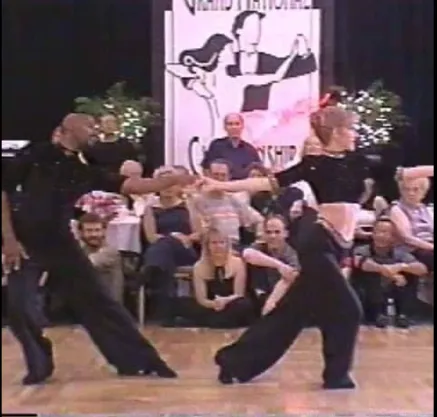
Enhancing Movement Quality in West Coast Swing
Dance, West Coast Swing, Technique
Quality of Movement in West Coast Swing: What Really Makes It Feel Good

When you watch a great West Coast Swing dancer, it’s not just the cool spins or fancy arm styling that catch your eye. It’s how clean everything looks and how smooth it feels to dance with them. That’s quality of movement, and it matters a lot more than most people realize, especially for social dancing.
Quality of Movement vs. Styling: They’re Not the Same
Styling is what you add on top of your basics, arm lines, head rolls, footwork variations. Quality of movement is how you do the actual steps themselves. You can have zero fancy styling and still look amazing if your movement is controlled, continuous, and clear. On the flip side, you can throw in tons of styling and still feel choppy or uncomfortable to dance with if the underlying movement isn’t balanced and controlled.
Control and Continuity: No More “Start–Stop” Dancing
Control isn’t about dancing stiff; it’s about choosing where and how your body moves instead of letting momentum yank you around. In West Coast Swing, that means you can start, slow down, and finish a pattern without wobbling, grabbing your partner, or suddenly speeding up because you’re off balance.
Continuity is what makes everything look smooth. Rather than each step being a separate event, your body flows from one point to the next. Think of it like handwriting: block letters versus cursive. Same letters, totally different look. In dancing, continuity keeps your basics from feeling like a series of mini collisions down the slot.
Balance, Posture, and Weight Transfer: Your Silent Superpowers
Good balance starts with simple things: your feet under you, your weight over the balls and heels (not just your toes), and no leaning like a tree in a storm. When you’re balanced, you don’t have to cling to your partner or rush to “catch” yourself on the next step. That alone makes you feel more reliable to dance with.
Posture doesn’t mean military straight. Aim for relaxed, tall, and open through the chest, with your head over your ribs, not poking forward. This lets your upper body send clear information through the connection instead of mixed signals from a collapsed frame or slumped shoulders.
Weight transfer is the quiet hero. Each time you step, you’re committing your body weight from one foot to the other. Unclear weight transfer, hovering between feet, half-stepping, or never really landing, makes your movement look hesitant and feel mushy to your partner. Clear transfer makes your timing and direction obvious without you needing to yank or push.

Clean posture and committed weight make even simple steps look intentional.
Clear Intention and Completing Each Movement
Clear intention means your body is always saying, “I’m going here, at this speed, on this timing.” If you’re unsure, your partner feels that as mixed messages. If you decide, “I’m traveling down the slot for two beats,” and your body fully commits to that choice, the dance suddenly feels easier for both of you.
A big part of intention is committing and finishing each movement. Instead of rushing from anchor to walk-walk to triple, let each step arrive: your foot lands, your weight transfers, your body settles, then you move on. When you cut that process short, everything looks abrupt or unfinished, like you’re constantly interrupting yourself. Not committing or not finishing makes you appear unconfident and gets you off beat.
Common Habits That Make Movement Look Abrupt
Stepping early to the next count before your body weight finishes arriving on the current foot.
Letting the upper body stop while the feet keep going, creating a jerky, disconnected look.
Dropping posture at the end of patterns, as if the move is “over” and you’ve mentally checked out. Not letting every movement flow through your body from the floor to your partner.
A Simple Solo Drill You Can Do at Home
Try this “slow walk” drill. You only need a small space and a song you like:
Stand tall with relaxed posture. Put your weight fully on your left foot.
On a slow count of “1–2,” step forward onto your right foot. Take the full two counts to let your weight transfer and your body settle over that foot.
Repeat stepping onto the left, then right, walking in a straight line. No rushing, no extra styling, just clear, complete steps.
Repeat the process but this time notice the points of pressure along the foot as you move your weight from one end of the foot to the other. If you strike (touch down onto the floor) with the heel or toe plus the ball of the foot, notice what the pressure feels like at that part of the foot as you are completing the weight transfer. Make a mental note of this correlation of the center mass over the receiving foot.
Once that feels easy, add a gentle body flight and let your center glide smoothly between steps without pausing.
It’s simple, but if you practice this a few minutes at a time, your control, continuity, balance, posture, weight transfer, and intention will all start to improve, and your West Coast Swing will feel better to every partner you dance with, even before you add a single bit of styling.
